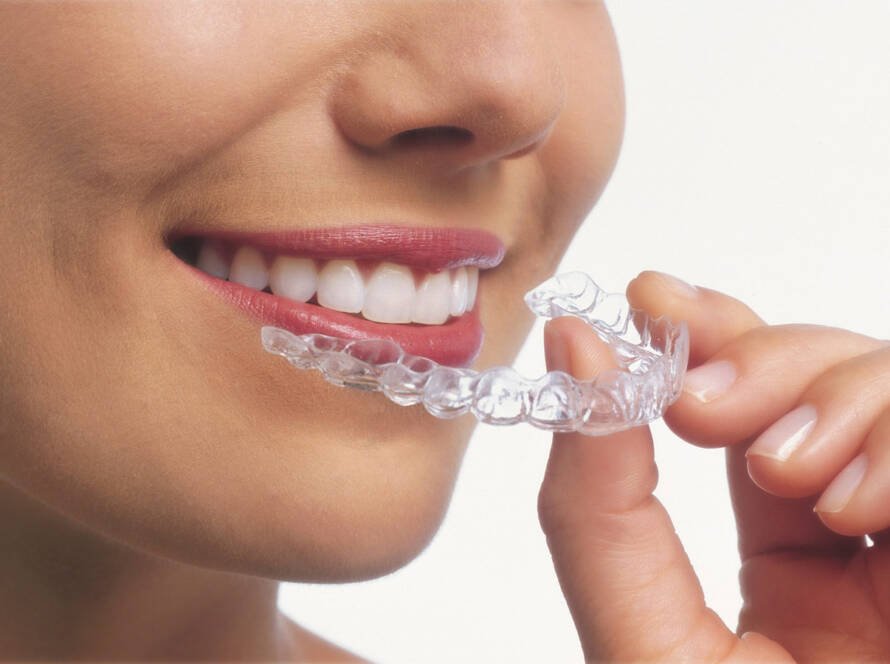

Have you ever wished for straighter teeth but hesitated at the thought of wearing traditional metal braces? Whether you have crooked teeth, noticeable gaps, or an uneven bite, Invisalign offers a discreet orthodontic treatment option that may help improve your smile without fixed metal brackets and wires.
But who can get Invisalign treatment in Bangalore, and how do you know whether clear aligners are suitable for your teeth?
Invisalign may be suitable for teenagers and adults with certain orthodontic conditions, including crowded teeth, spacing problems, and some types of bite irregularities. However, not everyone is an ideal candidate. Your eligibility depends on your dental health, the complexity of your tooth alignment, the condition of your gums and supporting bone, and your ability to wear aligners consistently.
At Quintessence Dental in Bangalore, orthodontist Dr. Krithika M. Jayaram evaluates each patient’s dental condition to determine whether Invisalign is an appropriate treatment option.
Understanding who can benefit from Invisalign and when an alternative orthodontic treatment may be necessary can help you make an informed decision about your dental health.
Who Is a Good Candidate for Invisalign Treatment?
Invisalign uses a series of custom-made, removable clear aligners to gradually move teeth into their planned positions. Each set of aligners applies controlled forces to specific teeth according to an individualized orthodontic treatment plan.
Unlike traditional braces, Invisalign aligners can be removed while eating, brushing, and flossing. Their transparent appearance also makes them less noticeable during everyday activities.
However, Invisalign eligibility depends on more than the appearance of your teeth. An orthodontist must evaluate your bite, jaw relationship, oral health, and the movements required to achieve the desired alignment.
The following dental conditions may be suitable for Invisalign treatment.
1. People With Crooked or Misaligned Teeth
Crooked teeth are among the common reasons people seek orthodontic treatment.
Teeth may develop in irregular positions because of differences in jaw size, tooth size, eruption patterns, or other developmental factors. Some teeth may appear rotated, tilted, or positioned in front of or behind neighbouring teeth.
Apart from affecting the appearance of your smile, certain types of misalignment can make it difficult to clean between teeth, potentially contributing to plaque accumulation.
Invisalign may help correct crooked teeth by gradually moving them into better alignment.
However, the complexity of the required movements determines whether clear aligners are suitable. Teeth that are severely rotated or require extensive repositioning may need additional orthodontic measures or an alternative treatment approach.
If you have crooked teeth and are considering Invisalign treatment in Bangalore, an orthodontic examination can help determine whether clear aligners are appropriate for your condition.
2. Patients With Crowded Teeth
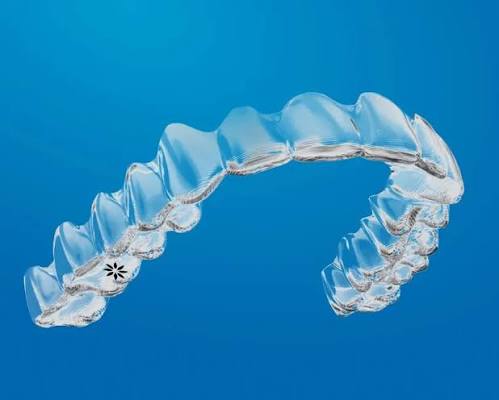
Dental crowding occurs when there is insufficient space in the dental arch for all the teeth to align properly.
As a result, some teeth may overlap, rotate, or become displaced from their normal positions.
Mild to moderate crowding can often be treated using clear aligners. Certain complex cases may also be manageable with Invisalign, depending on the required tooth movements and treatment plan.
Your orthodontist may recommend creating additional space through carefully planned tooth movements, interproximal reduction, or other orthodontic procedures when clinically appropriate.
However, severe crowding may require a different treatment approach, including fixed braces or additional orthodontic treatment.
The suitability of Invisalign depends on the amount of available space, the position of the teeth, and the overall bite relationship.
3. People With Gaps Between Their Teeth
Do you have noticeable spaces between your front teeth or gaps in other areas of your smile?
These spaces may develop because of differences between tooth size and jaw size, missing teeth, tooth movement, or other dental conditions.
Invisalign may help close certain gaps by gradually moving the teeth closer together.
However, identifying the underlying cause of the spacing is important before beginning orthodontic treatment.
For example, gaps associated with active gum disease or missing teeth may require additional dental care or a coordinated orthodontic and restorative treatment plan.
An orthodontist can assess the spacing between your teeth and determine whether Invisalign can achieve the desired correction.
4. Patients With Overbite, Underbite, Crossbite or Open Bite
Your bite describes how your upper and lower teeth meet when you close your mouth.
Some people develop bite irregularities that affect the alignment of their teeth, chewing function, or the way their upper and lower dental arches fit together.
Invisalign may be considered for certain types of bite problems.
Overbite: An excessive vertical overlap of the upper front teeth over the lower front teeth. Certain overbite problems can be corrected through planned orthodontic tooth movement.
Underbite: A bite relationship in which the lower front teeth sit ahead of the upper front teeth. Invisalign may help in selected cases, but significant skeletal jaw discrepancies can require additional treatment.
Crossbite: A condition in which one or more upper teeth bite inside the corresponding lower teeth. Some dental crossbites can be corrected with clear aligners, depending on their severity and underlying cause.
Open bite: A condition in which certain upper and lower teeth do not meet when the jaws are closed. Invisalign may be suitable for selected open-bite cases, although treatment depends on the dental and skeletal factors involved.
Not every bite problem can be corrected using clear aligners alone. An orthodontist must determine whether the irregularity is primarily related to tooth position, jaw structure, or a combination of both.
For additional information about orthodontic treatment and the conditions it can address, patients can refer to the UK National Health Service’s guidance on orthodontics .
5. People Whose Teeth Have Shifted After Previous Braces
Have you previously undergone orthodontic treatment but noticed that your teeth are gradually becoming crooked again?
Teeth can shift after orthodontic treatment, particularly when retainers are not worn as prescribed.
This movement is known as orthodontic relapse.
Invisalign may be an option for correcting certain types of relapse, including minor crowding, spacing, or changes in tooth alignment.
For example, a patient who previously had braces may notice that their lower front teeth have become crowded several years after completing treatment.
Depending on the extent of the movement and the current bite relationship, clear aligners may help restore the desired alignment.
However, an orthodontic examination is necessary to determine whether Invisalign is suitable and whether additional treatment is required.
What Is the Right Age to Get Invisalign Treatment?
One of the most common concerns about Invisalign eligibility is whether there is a particular age at which someone should begin treatment.
There is no single age that makes every patient suitable for Invisalign.
Instead, an orthodontist considers dental development, oral health, the complexity of the alignment problem, and the patient’s ability to follow treatment instructions.
Can Teenagers Get Invisalign?
Yes, Invisalign may be suitable for teenagers whose dental development and orthodontic needs make them appropriate candidates.
During adolescence, permanent teeth continue to emerge, and the jaws may still be developing. This period can be an appropriate time to address certain orthodontic conditions.
Teenagers with crowded teeth, spacing problems, or suitable bite irregularities may be candidates for clear aligner treatment.
However, Invisalign requires consistent wear. Teenagers must be willing to wear their aligners for the prescribed number of hours each day, remove them during meals, and maintain good oral hygiene.
Parents should also understand that removable aligners can be misplaced or damaged if they are not stored properly.
Some teenagers may benefit from conventional braces or other orthodontic appliances, depending on their stage of dental development and treatment requirements.
An orthodontic consultation can help parents understand which treatment options are appropriate for their child.
Can Adults Get Invisalign Treatment?
Yes. Adults can receive Invisalign treatment if their oral health and orthodontic condition make them suitable candidates.
Many adults consider orthodontic treatment because they have lived with crooked teeth for years, developed gaps between their teeth, or experienced tooth movement after previous braces.
For working professionals, the appearance of traditional metal braces may be an important consideration.
Invisalign offers a less noticeable treatment option because its clear aligners are designed to fit closely over the teeth.
The aligners can also be removed for meals and routine oral hygiene.
However, adult orthodontic treatment requires careful evaluation of the teeth, gums, supporting bone, and existing dental restorations.
Adults with healthy teeth and gums may be eligible for Invisalign even if they have never undergone orthodontic treatment before.
Can You Get Invisalign After the Age of 40 or 50?
Being over 40 or 50 does not automatically prevent someone from receiving Invisalign treatment.
Age alone is not the deciding factor. The condition of your teeth, gums, supporting bone, and overall oral health is more important.
For example, a healthy adult in their 50s with mild dental crowding may be a suitable candidate for Invisalign.
On the other hand, a younger person with untreated periodontal disease may need dental treatment before beginning orthodontic care.
Older adults may also have crowns, bridges, dental implants, or missing teeth that must be considered during treatment planning.
According to the National Health Service’s orthodontic guidance , adults can begin orthodontic treatment at any age, although treatment suitability depends on their dental health and individual requirements.
If you are considering Invisalign later in life, a comprehensive orthodontic examination can help determine whether clear aligners are appropriate for your teeth.
Who May Not Be Suitable for Invisalign Treatment?
Although Invisalign can treat a wide range of orthodontic conditions, it is not suitable for every patient.
Some people may need additional dental care before beginning treatment, while others may benefit from conventional braces or a different orthodontic approach.
Understanding these limitations is an important part of determining who can get Invisalign treatment in Bangalore.
1. Patients With Untreated Gum Disease
Healthy gums and adequate bone support are important considerations before starting orthodontic treatment.
Patients with active periodontal disease may experience gum inflammation, bleeding, gum recession, or loss of the bone supporting their teeth.
Moving teeth while periodontal disease remains uncontrolled can increase the risk of complications.
Patients with gum disease may therefore require periodontal treatment and stabilization before Invisalign or another orthodontic treatment is considered.
However, having a history of gum disease does not automatically rule out Invisalign. If the condition is stable and adequate periodontal support is present, orthodontic treatment may still be possible under appropriate professional supervision.
The National Institute of Dental and Craniofacial Research, a US government health research institute , explains how periodontal disease affects the tissues and bone supporting the teeth.
A comprehensive dental examination can help determine whether your gums are healthy enough for orthodontic treatment.
2. People With Untreated Tooth Decay
Patients with untreated cavities may need restorative dental treatment before beginning Invisalign.
Tooth decay can cause pain, sensitivity, and structural damage. It may also affect aligner fit if substantial dental restoration becomes necessary after orthodontic treatment planning.
Before starting Invisalign, your dentist may recommend fillings or other procedures to restore damaged teeth.
Maintaining good oral hygiene throughout treatment is equally important.
Because aligners cover the teeth for much of the day, patients should brush and floss regularly and clean their aligners according to their orthodontist’s instructions.
3. Patients With Complex Orthodontic or Jaw Problems
Certain complex orthodontic conditions may require tooth movements that are difficult to achieve with clear aligners alone.
Examples include significant skeletal jaw discrepancies, complex tooth rotations, or cases requiring extensive changes in tooth position.
Some patients may need fixed braces, additional orthodontic appliances, or a combined orthodontic and surgical treatment plan.
However, the severity of a condition cannot always be determined simply by looking at the teeth.
An orthodontist must assess the bite, jaw relationship, tooth roots, supporting bone, and required movements before recommending treatment.
If Invisalign is not appropriate, your orthodontist can explain the available alternatives and why another approach may be more suitable.
4. Patients Who Cannot Wear Aligners Consistently
Invisalign treatment requires commitment.
For many patients, aligners need to be worn for approximately 20–22 hours per day, including while sleeping, unless their orthodontist provides different instructions.
They are generally removed for eating, drinking beverages other than water, and cleaning the teeth.
Patients who frequently forget to wear their aligners or remove them for extended periods may experience delayed or less predictable tooth movement.
If wearing removable aligners consistently would be difficult because of your daily routine or personal preferences, fixed braces may be a more practical orthodontic treatment option.
Can You Get Invisalign If You Have Crowns, Dental Implants or Missing Teeth?
Many adults considering Invisalign have previously undergone dental treatment.
Having crowns, implants, or missing teeth does not necessarily mean you cannot receive Invisalign, but these conditions require careful treatment planning.
Invisalign Treatment With Dental Crowns
A dental crown covers a natural tooth that has been restored because of damage, decay, or other dental concerns.
In many cases, teeth with crowns can be moved orthodontically if the underlying tooth, roots, and supporting tissues are healthy.
However, crowns may affect how orthodontic attachments are bonded and how aligners fit.
Your orthodontist will evaluate the condition of your existing restorations before recommending treatment.
Invisalign Treatment With Dental Implants
Dental implants are anchored directly into the jawbone and cannot be moved orthodontically in the same way as natural teeth.
However, natural teeth surrounding an implant may sometimes be moved using Invisalign.
Treatment planning must account for the fixed position of the implant, the available space, and the intended alignment of the surrounding teeth.
Patients with dental implants should undergo an orthodontic assessment to determine whether the desired tooth movements are achievable.
Invisalign Treatment With Missing Teeth
Missing teeth can affect the alignment of surrounding teeth and the relationship between the upper and lower dental arches.
In certain cases, Invisalign may be used to reposition existing teeth before a dental implant, bridge, or another restorative treatment.
For example, if neighbouring teeth have tilted into the space left by a missing tooth, orthodontic treatment may help create an appropriate arrangement for subsequent restorative care.
The orthodontist and restorative dentist may need to coordinate the treatment plan.
Whether Invisalign is suitable depends on the location of the missing teeth, available bone support, bite relationship, and intended restorative treatment.
How Does an Orthodontist Determine Invisalign Eligibility?
You cannot determine your eligibility for Invisalign simply by looking at your teeth in a mirror.
Two patients may appear to have similar alignment problems but require different orthodontic treatment plans because of differences in their bite, tooth roots, jaw structure, or gum health.
At Quintessence Dental in Bangalore, an orthodontic consultation with Dr. Krithika M. Jayaram can help identify your dental concerns and determine whether Invisalign is an appropriate treatment option.
Step 1: Examination of Your Teeth, Gums and Bite
The first step is a comprehensive assessment of your oral health.
Your orthodontist examines your tooth alignment, bite relationship, gum condition, and existing dental restorations.
The examination also helps identify dental problems that may need to be addressed before orthodontic treatment begins.
If you have untreated cavities, active gum disease, or other oral health concerns, additional dental care may be recommended before starting Invisalign.
Step 2: Digital Scanning and Diagnostic Records
If Invisalign appears suitable, your orthodontist may recommend digital dental scans, photographs, and radiographs where clinically indicated.
Digital scanning creates a detailed three-dimensional representation of your teeth.
These records help your orthodontist evaluate your existing tooth positions and develop an individualized treatment plan.
Diagnostic imaging may also be necessary to assess tooth roots, supporting bone, and other structures that cannot be evaluated through a surface scan alone.
Step 3: Personalized Invisalign Treatment Planning
After reviewing your examination findings and diagnostic records, your orthodontist can explain the available treatment options.
If Invisalign is appropriate, a digital treatment plan may be prepared to illustrate the proposed sequence of tooth movements.
The plan may include orthodontic attachments, interproximal reduction, elastics, or other measures when clinically necessary.
A digital simulation represents the intended treatment plan rather than a guarantee of the final result.
Your orthodontist will also explain the expected treatment duration, possible limitations, and importance of wearing the aligners as instructed.
Step 4: Discussing Treatment Alternatives
If Invisalign is not appropriate for your orthodontic condition, your orthodontist may recommend conventional braces or another treatment approach.
The decision should consider your oral health, orthodontic requirements, treatment preferences, and long-term dental health.
A consultation gives you an opportunity to understand the available options before deciding whether to proceed with treatment.
Invisalign Treatment in Bangalore at Quintessence Dental
Bangalore is home to students, working professionals, families, and older adults with different orthodontic needs and daily routines. A professional working near Cunningham Road may prefer a discreet orthodontic treatment option during meetings and presentations, while a college student in Vasanth Nagar may be interested in correcting crowded teeth without traditional metal braces. Parents in Kalyan Nagar may also want to understand whether Invisalign is suitable for their teenagers. Regardless of your age or lifestyle, the decision to begin Invisalign treatment should be based on a professional assessment of your dental health and orthodontic requirements.
At Quintessence Dental, Dr. Krithika M. Jayaram provides orthodontic consultations for patients considering clear aligner treatment.
With BDS and MDS qualifications, Dr. Krithika evaluates tooth alignment, bite relationships, and individual treatment requirements before recommending an orthodontic approach.
Whether you have crowded teeth, spacing problems, bite irregularities, or teeth that have shifted after previous orthodontic treatment, a consultation can help you understand whether Invisalign is an appropriate option.
Patients considering Invisalign treatment in Bangalore can discuss their dental concerns, understand the available treatment methods, and receive guidance based on their individual orthodontic condition.
Why Is a Professional Orthodontic Assessment Important Before Invisalign?
Invisalign is not simply a cosmetic treatment designed to make teeth look straighter. Orthodontic treatment also involves evaluating how the teeth function together and how tooth movement may affect the surrounding dental structures.
A patient with mild crowding may require a relatively straightforward treatment plan, while someone with a complex bite problem may need additional orthodontic measures.
Similarly, patients with gum disease, missing teeth, or previous dental restorations may require a more detailed assessment before beginning treatment.
Attempting to straighten teeth without an appropriate diagnosis can overlook underlying dental problems or lead to unsuitable treatment planning.
The National Institute of Dental and Craniofacial Research provides government-supported educational information about oral health conditions and the importance of maintaining healthy teeth and gums.
A qualified orthodontist can evaluate your dental condition, explain the potential benefits and limitations of Invisalign, and recommend a treatment approach based on your individual needs.
Find Out Whether You Are Eligible for Invisalign Treatment in Bangalore
If you have crooked teeth, gaps between your teeth, crowding, or certain bite irregularities, Invisalign may be an option worth considering.
However, eligibility depends on more than your age or the appearance of your smile.
Your dental health, jaw relationship, orthodontic condition, and ability to wear aligners consistently all influence whether Invisalign is suitable for you.
At Quintessence Dental in Bangalore, Dr. Krithika M. Jayaram can evaluate your teeth and bite to determine whether clear aligners or another orthodontic treatment may be appropriate for your needs.
Book an Invisalign consultation at Quintessence Dental to understand your treatment options and find out whether you are a suitable candidate for Invisalign.